




COLORADO (KOAA) — Scams and predatory tactics targeting the elderly across the United States and in Colorado continue to be a growing trend.
The latest data available for scams in Colorado and the United States is from 2024. The Internet Crime Complaint Center (IC3) is the hub for reporting cyber-enabled crime and is run by the Federal Bureau of Investigation (FBI).
Across the United States, the FBI says that there were nearly 147,000 victims who were ages 60+, and losses reported to IC3 were almost $4.3 billion. That represented a nearly 43% increase in losses compared to data from 2023.
From the most recent report available in Colorado, the top 5 scams by victim count and loss are as follows.
Top 5 by Victim Count
- Non-payment/Non-Delivery – 579 victims
- Tech Support – 411 victims
- Extortion – 355 victims
- Phishing/Spoofing – 293 victims
- Confidence/Romance – 178 victims
Top 5 by Victim Loss
- Investment – $26,479,901
- Tech Support – $13,837,547
- Confidence/Romance – $9,679,627
- BEC (Business Email Compromise) – $7,078,673
- Cryptocurrency (Descriptor) – $30,570,763*
*The IC3 labels cryptocurrency as a descriptor, meaning it is a tool or medium used for a variety of crimes, not a category itself, which is why it is placed at 5.
Romance Scams
One of the largest impacts among those 60 and up is romance scams, a scam that can be debilitating as well as embarrassing for many. In 2024, 178 Coloradans were targeted for more than $9 million.
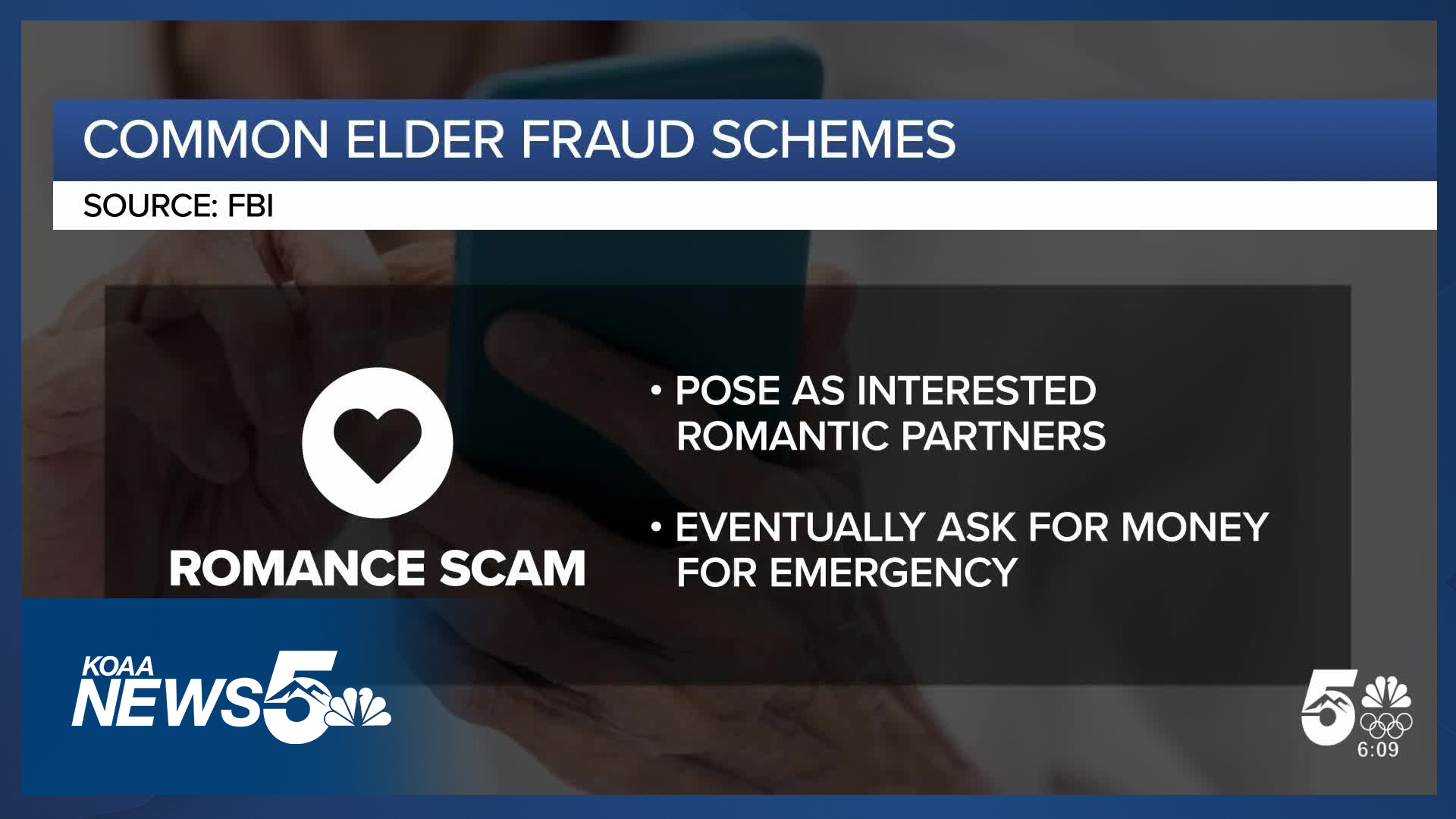
These scams often come as criminals posing as an interested romantic partner across social media or dating websites to capitalize on the loneliness of the individual.
Scammers will develop an online relationship, eventually asking for money but never actually being willing to meet in person.
- Watch Our Previous Coverage on Romance Scams and How One Local Man Lost Over $11,000
Some simple ways to protect yourself from the FBI are as follows:
- Recognize scam attempts and end all communication with the perpetrator.
- Create a shared verbal family password or phrase that only you and your loved ones know.
- Search online for the contact information (name, email, phone number, addresses) and the proposed offer. Other people have likely posted information online about individuals and businesses trying to run scams.
- Resist the pressure to act quickly. Scammers create a sense of urgency to produce fear and lure victims into immediate action.
- Call the police immediately if you feel there is a danger to yourself or a loved one.
- Be cautious of unsolicited phone calls, mailings, and door-to-door service offers.
- Never give or send any personally identifiable information, money, gold or other precious metals, jewelry, gift cards, checks, or wire information to unverified people or businesses.
- Make sure all computer anti-virus and security software and malware protections are up to date. Use reputable anti-virus software and firewalls.
- Disconnect from the internet and shut down your device if you see a pop-up message or a locked screen. Pop-ups are regularly used by perpetrators to spread malicious software. Enable pop-up blockers to avoid accidentally clicking on a pop-up.
- Be careful what you download. Never open an email attachment from someone you don't know, and be wary of email attachments forwarded to you.
- Take precautions to protect your identity if a criminal gains access to your device or account. Immediately contact your financial institutions to place protections on your accounts, and monitor your accounts and personal information for suspicious activity.
For more information about how you can protect yourself or loved ones, click here. If you believe you or someone you know may have fallen victim to elder fraud, you can file a complaint here.
___

Right to Hunt and Fish? Amendment 83
____
Watch KOAA News5 on your time, anytime with our free streaming app available for your Roku, FireTV, AppleTV and Android TV. Just search KOAA News5, download and start watching.
