

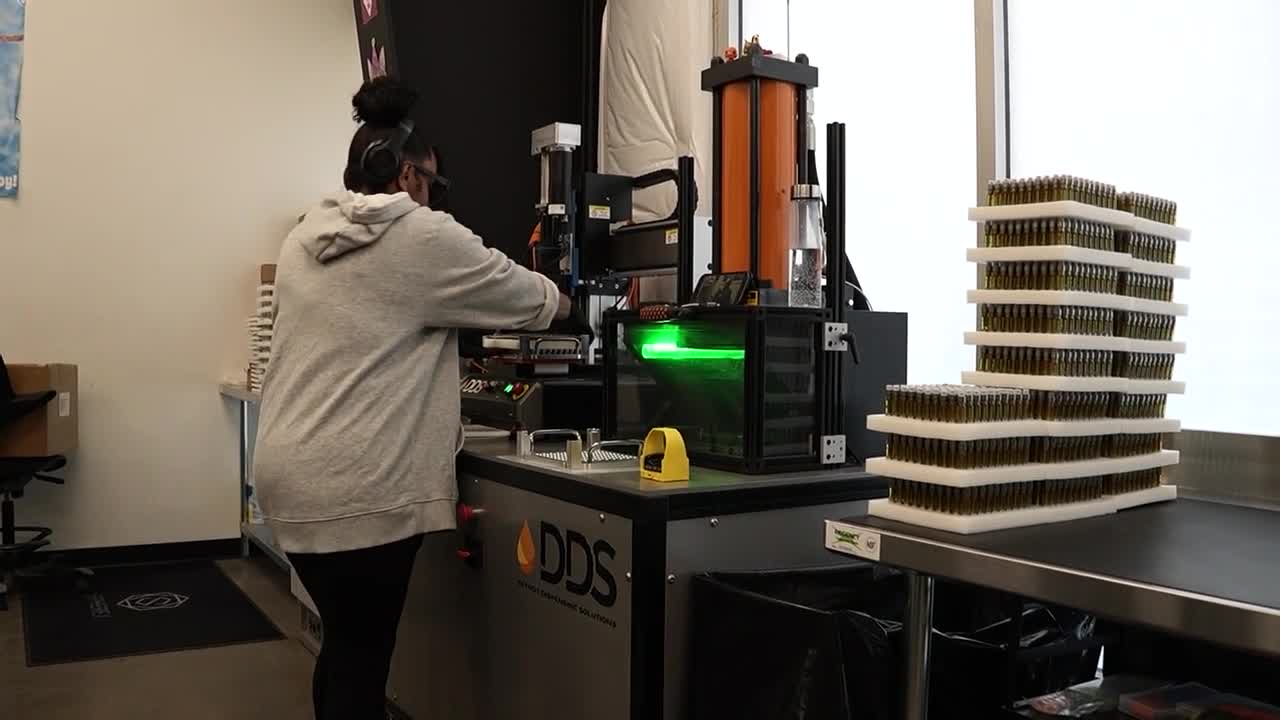


AURORA, Colo. — At the SPHEREX production facility in Aurora, cannabis production runs like clockwork.
“We have a really modern, state of the art facility here, and a lot of automation, a lot of science behind everything we do,” said SPHEREX Chief Revenue Officer Ryan Hunter.
SPHEREX takes a methodical approach: Extracting cannabis oils with CO2, then refining them through winterization and distillation. The finished cartridges are distributed to over 400 dispensaries statewide.
“We now have the capacity to produce about 500,000 vapor cartridges a month,” said Hunter.
Though SPHEREX has mass production down to a science, Hunter admits the industry has faced challenges recently.
"I think resilient is the main word," Hunter said when asked to describe Colorado's cannabis industry. "There's a lot less cannabis being produced overall, and sales overall have declined a bit from where they once were. And then, of course, the tax dollars that are derived from our industry along with that."

But that could soon change.
This week, President Donald Trump announced he's considering an executive order instructing federal agencies to pursue classifying marijuana as a less dangerous substance.
While Colorado has legalized both recreational and medicinal marijuana, the federal government currently classifies it as a Schedule I drug.
The Drug Enforcement Administration (DEA) defines that as a substance with "no medical use and a high potential for abuse." Schedule I drugs are considered the most dangerous and include heroin, LSD and ecstasy.
The reclassification would change marijuana to a Schedule III drug — with a moderate to low potential for physical dependence but high potential for psychological dependence — similar to Adderall or Tylenol with codeine.
Hunter believes reclassification would increase research opportunities, make marijuana more accessible to patients, and overall increase profitability.
“It's very encouraging. It takes a big shadow away from us and allows us to operate our businesses much more effectively,” he said.
Brian Vicente, co-founder at Colorado cannabis law firm Vicente LLP, agrees that operating in the cannabis industry would become easier under the reclassification.
“They really will be able to kind of rethink how they're running their businesses, rethink things like their marketing budget, what they're spending in the community and so forth, because those will be the tax-deductible expenses,” he added.
It would also make daily life easier for employees, too.
''Things that many people take for granted are difficult for employees in the cannabis industry, things like home mortgages, life insurance, financial advisory on retirement plans and college savings, we don't have the same level of access that people in other industries enjoy," said Hunter.
Shannon Donnelly, an adjunct professor of cannabis at MSU Denver, said the reclassification would eliminate the 280E tax schedule in Colorado. This reclassification would reduce the tax burden on cannabis businesses from 70-80% to 20-30%.
According to the state's Department of Revenue, Colorado has already collected more than $3.3 million in marijuana sales tax revenue this year. That number could increase significantly if marijuana is rescheduled.
"They actually could look at maybe 40% more revenue in next year's taxes than they've seen over the last 10 years," Donnelly said.
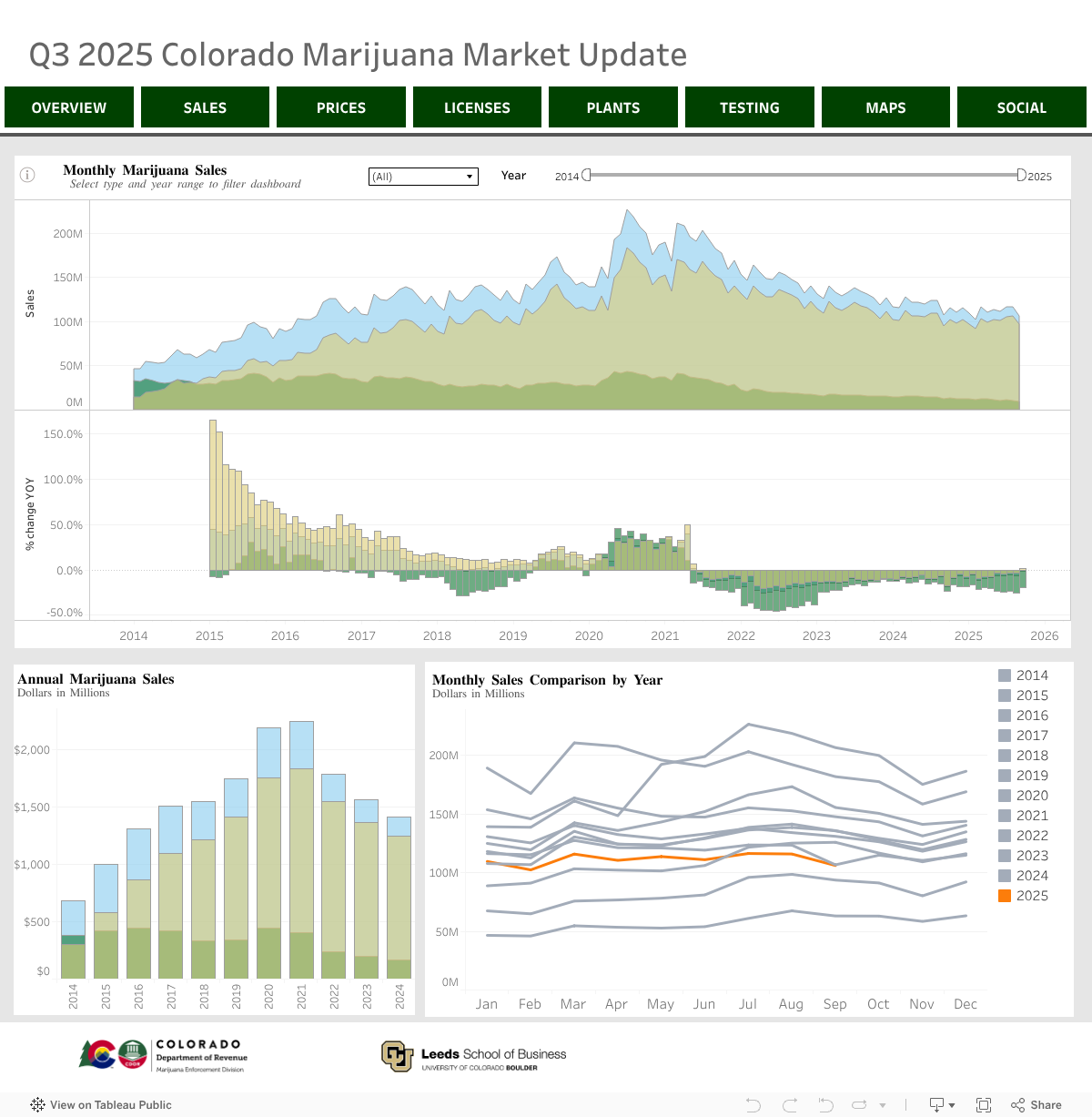
The first $40 million collected each year in retail marijuana excise tax revenue goes to public school construction. Any additional revenue is transferred to the public school fund.
There's also a 15% state marijuana sales tax, with revenue distributed to local governments where marijuana is sold.
Donnelly said the revenue has funded law enforcement, mental health services and housing programs.
“I really think, you know, Colorado's in a pretty tough place financially, but this would allow these businesses to really thrive again,” added Vicente.
But some Colorado advocates say this executive order is jumping the gun. Diane Carlson, policy director at One Chance to Grow Up, worries about increased accessibility and thinks more research needs to be done.
“It just seems dangerously premature, and it would also send a signal of normalization, you know, showing that this is acceptable for medical use, and just really advance the normalization of the use, which we feel is very dangerous for kids,” said Carlson.

If President Trump moves forward with the executive order, it could still take some time to see the changes take effect.
"It would require the DEA and the Department of Justice to follow through with that directive and and in fact, you know, move cannabis from Schedule I to Schedule III, which could happen in a series of months," said Vicente.
Even with the fluidity of the situation, Hunter remains optimistic.
"Ideally from there, this will turn into a change in how cannabis is regulated at the federal level. But time will still show what ultimately happens. But we see much more opportunity as a result of this than we than we have before," he said.
___

Right to Hunt and Fish? Amendment 83
____
Watch KOAA News5 on your time, anytime with our free streaming app available for your Roku, FireTV, AppleTV and Android TV. Just search KOAA News5, download and start watching.
