

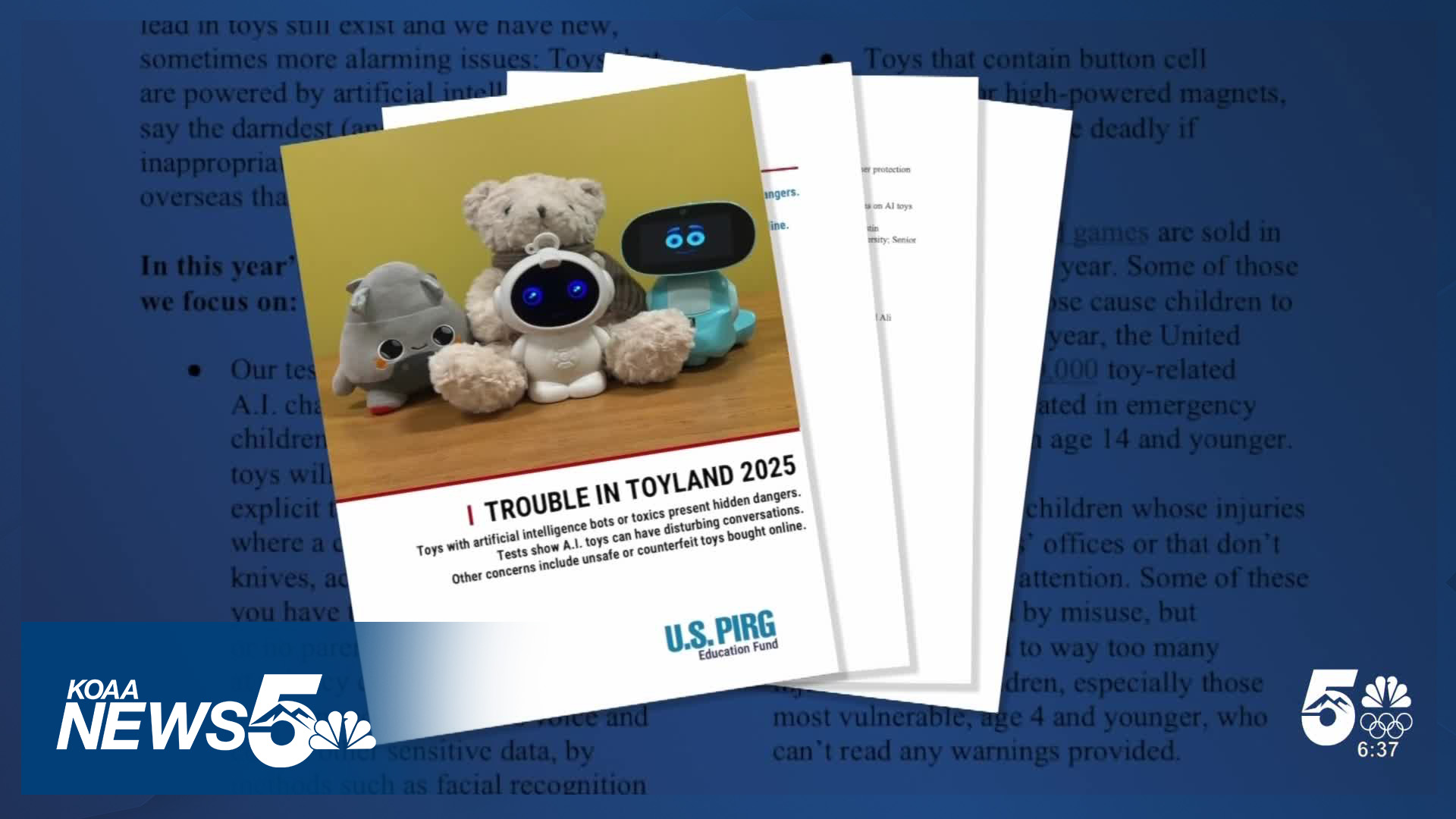

COLORADO SPRINGS, Colo. (KOAA) — As families shop for holiday gifts, a seasonal report is warning parents to take a closer look at the toys their children may soon be unwrapping.
The annual “Trouble in Toyland” report from the Public Interest Research Group (PIRG) highlights safety and privacy concerns tied to some popular toys on the market, especially those powered by artificial intelligence.
According to the report, some toys with AI chatbots are designed to talk and respond to children in ways that go beyond simple play.
"We found some of these toys will talk in-depth about sexually explicit topics, will offer advice on where a child can find matches or knives, act dismayed when you say you have to leave, and have limited or no parental controls," the PIRG report says.
That emotional connection is one of the biggest red flags, according to financial crimes expert J. Michael Skiba, Ph.D, also known as Dr. Fraud.
"I've seen some of them where if you go to turn them off, it will give a response back to you and say, "Oh, are you sure? I'm gonna miss you.' So, it will actually feed into an emotion, and imagine your child hearing this," Dr. Fraud explained.
Beyond emotional concerns, the report raises serious questions about privacy. Some newer, lower-cost toys using artificial intelligence are quietly collecting voice recordings and other personal data from children's devices that connect to the internet. It's information that may not be clearly disclosed to parents.
Dr. Fraud says that data can be more valuable than the toy itself.
“Data is the new oil,” he said. "It makes [fraudsters] rich because they can take a piece of data, your name, your date of birth, Social Security number. They can sell it on the dark web, and they can resell it over and over and over again.”
The report also found that recalled and counterfeit toys continue to be sold online.
These toys contain toxins such as lead and phthalates, which can be incredibly harmful to children, PIRG says. The consumer group warns that toys sold by unfamiliar or overseas sellers may not meet U.S. safety standards.
What Parents Can Do?
Do your research
Dr. Fraud advice parents to research toys before buying, even when shopping on well-known sites like Amazon. That includes visiting the manufacturer’s website directly to read privacy policies, check consumer reviews, and understand security updates.
Protecting your home network
Consider placing your smart toys on a guest Wi-Fi network instead of your main one. Doing so helps keep the toy isolated from personal devices like phones, computers, and tablets if it were ever hacked. Most modern routers already include a guest network option, and turning it on typically takes just a few minutes.
Limit use time
As toys become more advanced and collect and use information behind the scenes, parents should limit the time that their child is playing with the toy. Dr. Fraud says the more a bad actor knows about a child through their interactions, the more leverage they have to expose the family's or child's information.
"It really starts to learn and understand by simply listening," Dr. Fraud said. "This is why it's really important for parents to take an active role in managing both the technology piece and the education of the child, that this is not an emotional friend."
This story was written by KOAA News5 Consumer Reporter Kierra Sam. Have a story? Send an email to Kierra.sam@koaa.com

Renovations Wrap Up At Fox Run Regional Park
____
Watch KOAA News5 on your time, anytime with our free streaming app available for your Roku, FireTV, AppleTV and Android TV. Just search KOAA News5, download and start watching.
